
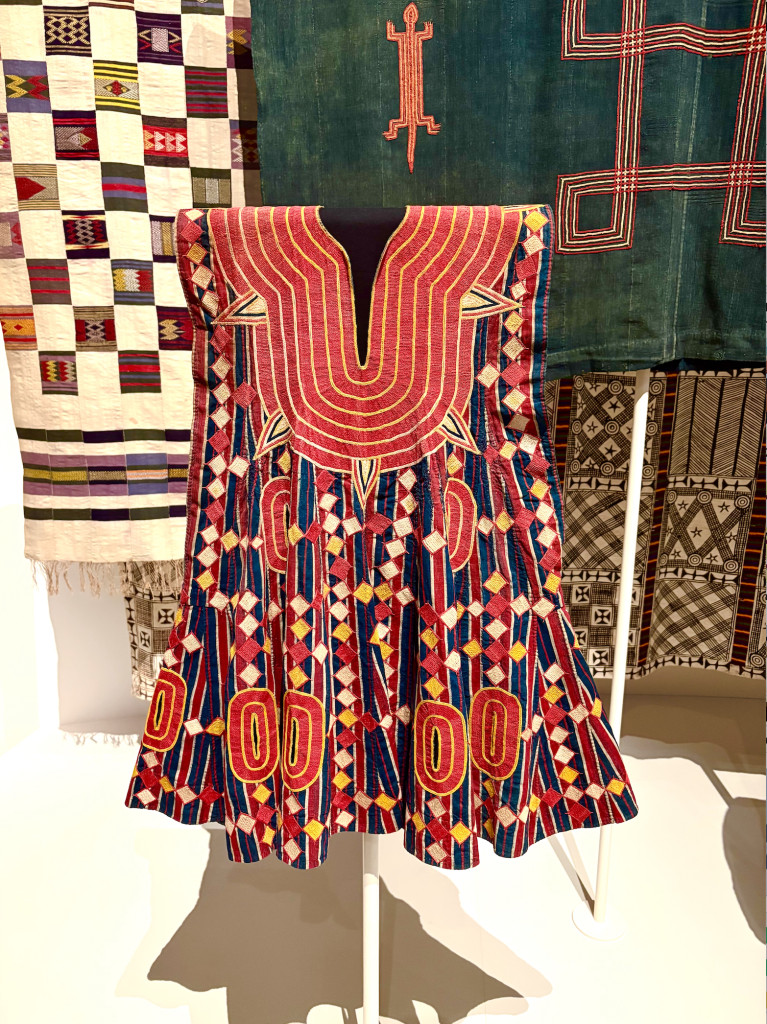
Pattern as Manifesto: What the Africa Fashion Exhibition Tells Us
The Africa Fashion exhibition at the musée du quai Branly in Paris was one of those standout moments: a vibrant immersion in which the colors, techniques and energy of designers tell far more than a story of fashion. It shows, with rare clarity, what I stand for in my own work: pattern is a language of identity.
A visual language in its own right
African textiles stand out for patterns and colors steeped in symbolism. Each design has an origin or carries deep cultural values; colours reinforce that symbolism, each with its own meaning. Through them, textiles tell stories, express identities and celebrate the continent’s cultural heritage.
It is a visual language in its own right, rooted in place. It is also a symbol one wears, and a statement of self. Pattern commits the person who wears it.
The 1960s: textile as emblem
This power became unmistakable in the 1960s. As countries gained independence, textiles emerged as a symbol of political and cultural emancipation. Reclaiming traditional patterns and dress meant proudly affirming a rediscovered identity, and making it visible to all.
Pattern became a manifesto.
When tradition feeds today’s design
What is fascinating about contemporary African designers is the way they reinvent this heritage with absolute modernity. Take the Nigerian designer Lisa Folawiyo. She works with Ankara, the West African name for wax-print fabric, and transforms it: embroidery, beading and handmade details turn an everyday textile into true couture pieces.
Yet the traditional pattern does not disappear: it becomes the very heart of the creation. That is the real lesson. Modernising an identity is not about erasing it, but about giving it a new expression, without losing what makes it recognisable.
From clothing to places and brands
This mechanism reaches far beyond fashion. A brand, a restaurant, a clinic or a boutique also has a story, values and roots. A pattern can make them visible: it makes an identity visible into a sign that people recognise and remember, and that carries from a wall to a menu, from a uniform to a website.
Pattern has meaning
African textiles remind us of the power of pattern as a carrier of identity. It does not simply dress or decorate: it tells a story. It is a means of expression, and an emblem.